Most business owners judge their website the way they judge their storefront window: does it look good? That is the wrong test. A website is not a poster. It is a salesperson that works around the clock, and like any salesperson, it either brings in business or quietly turns people away. The frustrating part is that a website losing leads rarely looks broken. It looks fine. It just doesn’t produce calls, forms or bookings the way it should.
- Test your site on your phone first. That is how most of your customers see it.
- Check five areas: speed, clarity, the call to action, trust and tracking.
- Score yourself honestly. Anything below 4 out of 5 in an area is costing you leads.
- Fix the biggest leak first, then move to the next one.
Here is a 15-minute audit you can run today. You don’t need any technical skills. You need your phone, a stopwatch and a little honesty. We use a more detailed version of this checklist when we review client websites, but this covers the problems we see most often across New York small businesses, from dental offices in Park Slope to HVAC companies in Queens.
Before you start: use your phone, not your laptop
You built and approved your website on a big screen. Your customers almost certainly find it on a small one. Someone searching for an emergency plumber in Astoria at 9 p.m. is not sitting at a desk. They are standing in a flooded kitchen holding a phone. So open your website on your phone, on cellular data rather than Wi-Fi, and pretend you are a first-time visitor who has never heard of you.
Minute 1 to 3: Speed
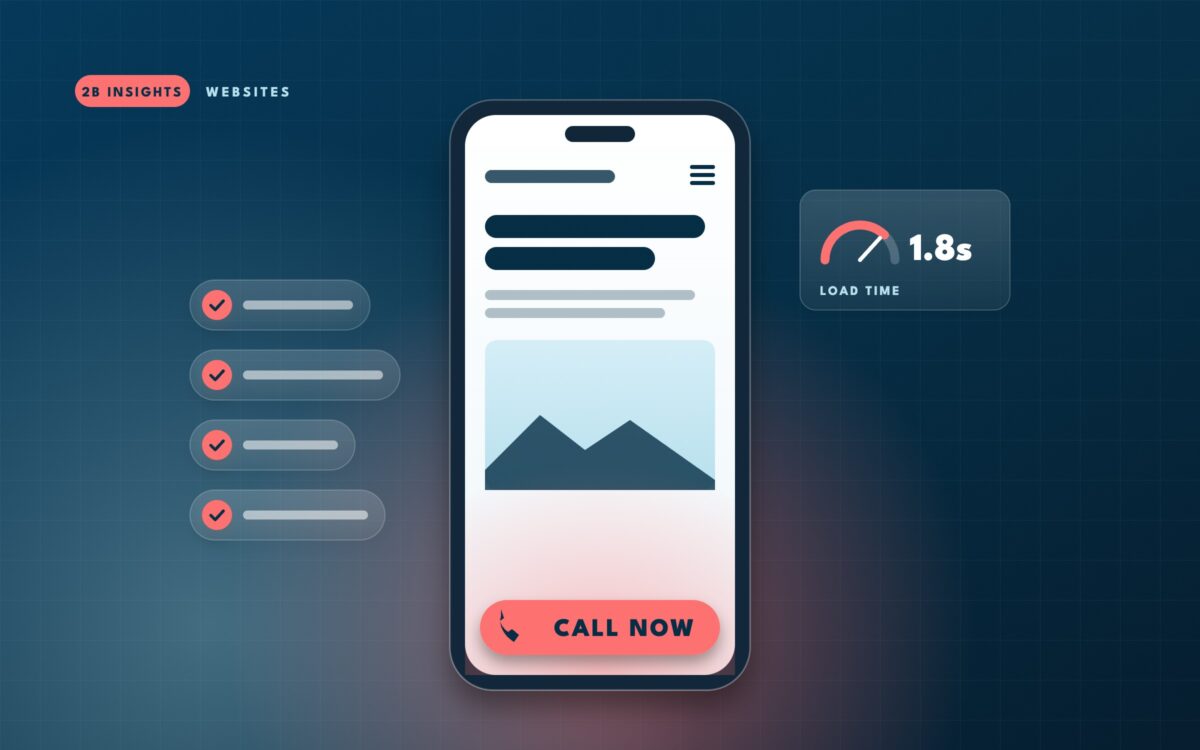
Type your web address into your phone’s browser and start counting. When does something useful appear on screen? Not a spinning logo, not a blank white page, but actual words and pictures that tell people they’re in the right place.
- Something useful appears in under 2 seconds
- The page is usable (you can scroll and tap) in under 3 seconds
- Nothing jumps around while it loads, pushing buttons out from under your thumb
- No pop-up covers the page before you’ve seen what the business does
If your site takes four or five seconds, a meaningful share of visitors will have already hit the back button and tapped your competitor’s listing instead. Google also uses page experience as a ranking signal, so a slow site costs you twice: fewer visitors, and fewer of those visitors sticking around.
Quick check: Google’s free PageSpeed Insights tool will grade your mobile speed. Don’t panic over the exact score. Look at the “Largest Contentful Paint” number. Under 2.5 seconds is good. Over 4 seconds is a problem worth fixing soon.
The usual culprits are oversized images, too many plugins, cheap hosting and page builders that load far more code than the page needs. Some of these are quick fixes. Others, like moving to better hosting or rebuilding a bloated page, take more care, because a careless change can break the parts of the site that already work.
Minute 4 to 6: Clarity
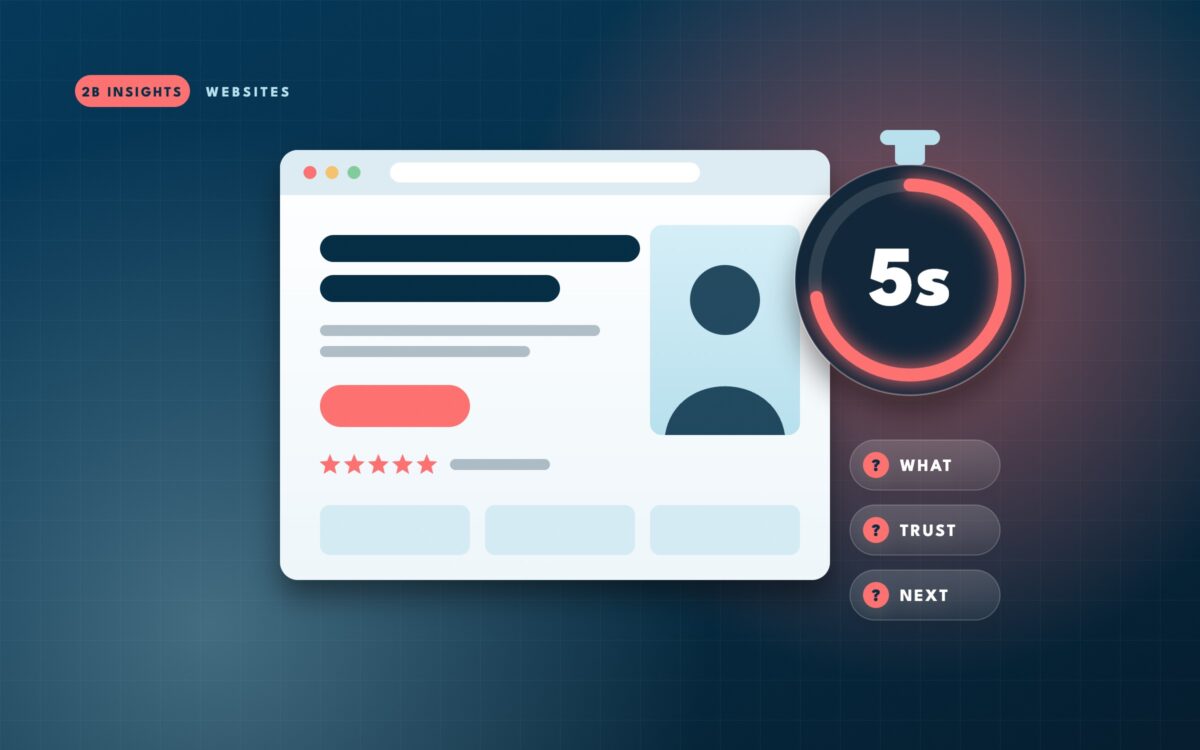
Look at the very first screen, before you scroll. Then look away and answer three questions out loud:
- What does this business do?
- Who is it for, and where?
- Why should I choose them over the next result?
If you can’t answer all three from that first screen, your visitors can’t either. The most common mistake we see is a headline that sounds nice but says nothing, such as “Excellence in Every Detail” or “Your Vision, Our Passion.” Compare that with “Emergency plumbing in Queens and Brooklyn. A licensed plumber at your door in 60 minutes.” The second one does the work. A visitor knows instantly whether they are in the right place.
Vague headline
- “Quality Service You Can Trust”
- “Welcome to Our Website”
- “Solutions for Tomorrow”
Clear headline
- “Family dentistry in Park Slope, open Saturdays”
- “Same-day AC repair across Queens”
- “Business tax prep for NYC restaurants”
Minute 7 to 9: The next step
Every page should make one action obvious. For most local businesses, that is a phone call, a booking or a quote request. Scroll through your homepage and your most important service page and check:
- There’s a clear button on the first screen, without scrolling
- The button says what happens next (“Book a cleaning,” “Get a free quote”), not just “Submit” or “Learn more”
- Your phone number is tap-to-call on mobile
- The contact form asks for five fields or fewer
- A button appears again after each major section, so nobody has to scroll back up
Then do the most revealing test in this whole audit: fill out your own contact form. Time how long it takes. Notice anything annoying. Then check that the message actually arrives in your inbox, and how quickly. We regularly find forms that look perfect but send leads to an old email address, a spam folder or nowhere at all. One broken form can quietly cost a business thousands of dollars a month, and nobody notices because nothing looks wrong.
Do this today: Submit a test through every form on your site and call your listed number from a different phone. If either one fails, fix that before you touch anything else on this list.
Minute 10 to 12: Trust
New York customers have options, and they are skeptical by default. Before they contact you, they want proof that you are real, local and good at what you do. Look for these signals on your site:
- Real reviews or testimonials with names, ideally near your call to action
- Photos of your actual team, location or work, not just stock images
- Your address or service area, clearly stated
- Licenses, certifications, awards or “as seen in” mentions, if you have them
- A copyright year in the footer that isn’t three years old
That last one sounds trivial, but an outdated footer or a “Latest News” section last updated in 2021 quietly tells visitors the business might not be active. Small signals add up.
Minute 13 to 15: Tracking
This is the part most owners skip, and it is the reason many can’t say whether their website works at all. Answer these honestly:
- You know roughly how many people visited your site last month
- You know how many of them called, booked or filled out a form
- You know which source (Google, ads, social, referrals) sent the people who became customers
If you can’t answer the second and third questions, you are not alone. Most sites have some analytics installed, but very few have conversions set up properly, which means the numbers show traffic but not results. Without that, every decision about your marketing is a guess.
Score yourself
Give each of the five areas a score from 1 to 5. Be strict. A 5 means a stranger would sail through it without a second thought.
| Area | Score 1 to 2 | Score 3 | Score 4 to 5 |
|---|---|---|---|
| Speed | Over 4 seconds on mobile | 2.5 to 4 seconds | Under 2.5 seconds |
| Clarity | Can’t tell what you do | Can tell, but not why you | What, who, where and why are obvious |
| Next step | No clear button or broken form | Button exists but is buried | Obvious, tested, tap-to-call |
| Trust | No reviews, all stock photos | Some proof, hard to find | Real proof near every call to action |
| Tracking | Nothing installed | Traffic only | Calls and forms tracked by source |
Add up your total out of 25. Above 20 means your site is in good shape and the gains will come from fine-tuning. Between 13 and 20 means there are real leaks, and fixing the lowest-scoring area will likely produce the fastest win. Below 13 usually means the site is working against you, and it is worth asking whether patching it or rebuilding it is the better use of money.
What to fix first
Start with anything that is outright broken: forms that don’t deliver, phone numbers that aren’t clickable, pages that don’t load. Those cost you leads every single day. After that, work on clarity and the next step, because they affect every visitor. Speed and tracking come next. Trust signals can be layered in over time as you collect more reviews and photos.
Some of these fixes take five minutes, like rewriting a headline or changing a button label. Others, like speeding up a heavy site or wiring tracking correctly to your phone calls and forms, are where most owners get stuck. Not because they aren’t capable, but because it is easy to spend a whole weekend on something that a specialist can sort out in an hour.
Want a second pair of eyes on your score?
On a free strategy call, we run this same audit on your site with you, plus the deeper checks that don’t fit in a blog post. You’ll leave with a prioritized list of fixes, whether or not we end up working together.