Every few months, someone asks us whether print, radio and mailers are dead. A dry cleaner in Riverdale wants to know if the flyers are still worth it. A family-run restaurant in Bay Ridge wonders whether to drop the local paper ad and put everything into Instagram. The honest answer is that neither digital nor traditional marketing wins on its own. What wins is the mix that brings in customers at a cost you can afford, and the only way to find it is to measure both the same way.
This post explains what each side is genuinely good at, how to track traditional marketing so you can compare it fairly, and how to decide where your next dollar should go.
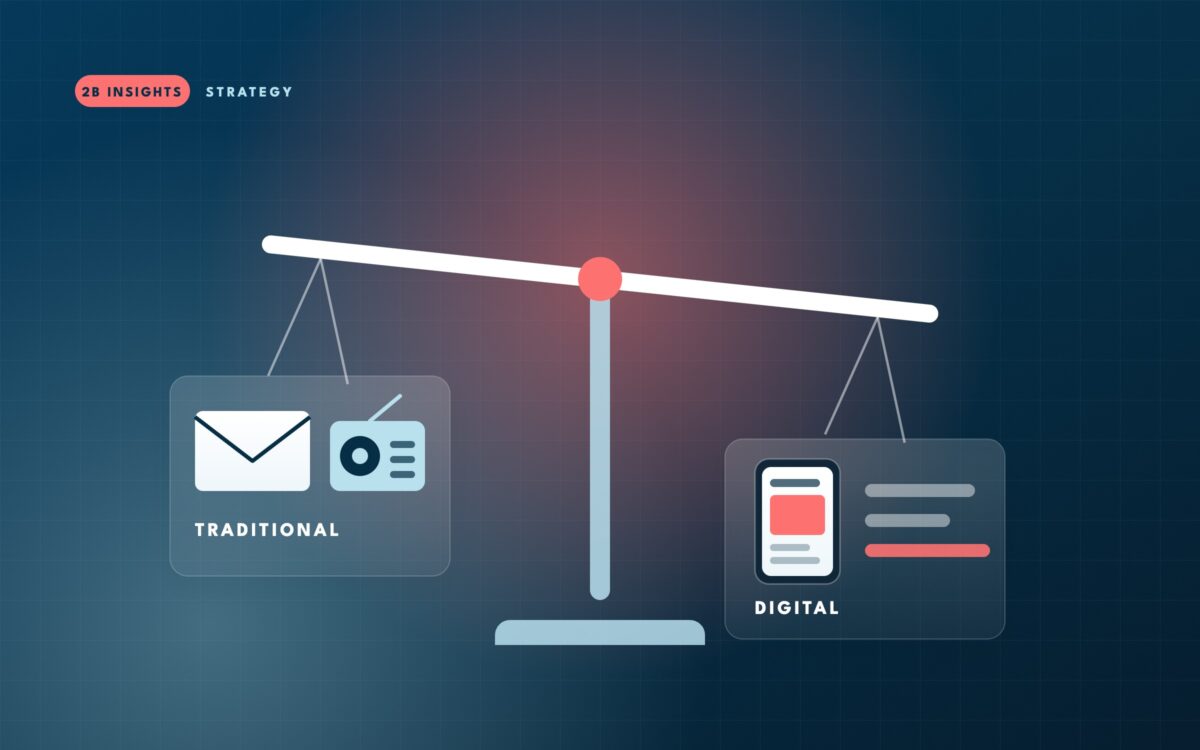
- Digital is better at targeting and measurement. Traditional is often better at local visibility and memory.
- Compare channels by cost per customer, not by reach or impressions.
- You can track print, radio and mail with unique numbers, codes and QR links.
- Shift budget gradually toward what proves itself, and keep testing.
What each side does well
It helps to stop thinking of these as rivals and start thinking of them as tools with different strengths.
Traditional marketing
- Reaches people who are not searching yet
- Physical presence builds local familiarity
- Can feel more established and permanent
- Harder to target and harder to measure
Digital marketing
- Reaches people at the moment they search
- Targets by area, interest and behavior
- Measurable down to the click and the call
- Easy to start small, adjust and scale
A mailer to every household within a mile of a new pediatric dental office can do something a search ad cannot: introduce the practice to parents before they need it. A search ad can do something the mailer cannot: show up exactly when a parent types “pediatric dentist near me” at 9pm.
The one number that makes channels comparable
The trouble with comparing marketing channels is that each one reports success in its own language. Print sells circulation. Radio sells listeners. Social platforms report reach and engagement. None of those are customers.
Channel spend ÷ New customers from that channel = Cost per customer
Once every channel is measured by what it costs to win a customer, the conversation changes. A radio spot with a big audience but no traceable customers stops looking impressive. A small, unglamorous Google campaign that brings in eight customers a month suddenly looks like your best investment.
How to track traditional marketing
The biggest reason traditional marketing gets cut is not that it fails. It is that nobody can prove it works. You can fix that with a few simple habits.
- Unique phone numbers. Use a separate call tracking number on each mailer, ad or billboard so you know which one made the phone ring.
- QR codes with tracking links. Point each printed piece to its own link so visits show up separately in your analytics.
- Offer codes. “Mention code PARK10” on a flyer tells you exactly where the customer came from.
- Dedicated landing pages. A short, memorable address like yoursite.com/spring works well on radio.
- Ask every new customer. “How did you hear about us?” at the counter or on the intake form, recorded every time.
Good to know: Traditional marketing often works indirectly. Someone sees your truck wrap for months, then searches your name on Google. Watch for rising branded searches and direct website visits after a traditional campaign starts.
A worked example
Here is a simplified, hypothetical month for a home services business in Westchester running four channels at once. The numbers are made up, but the pattern is one we see often.
| Channel | Spend | New customers | Cost per customer |
|---|---|---|---|
| Direct mail | $2,400 | 6 | $400 |
| Local radio | $3,000 | 3 | $1,000 |
| Google search ads | $2,000 | 10 | $200 |
| Facebook and Instagram ads | $1,200 | 4 | $300 |
On reach alone, radio would look like the winner. On cost per customer, it is the most expensive channel by a wide margin. Mail is not dead at all here. It is just more expensive than search. The decision that follows is not “cut everything traditional.” It is “test a smaller radio flight, keep mail, and put more into search until it stops getting cheaper.”
How to decide your split
There is no universal ratio. The right split depends on how your customers find businesses like yours. A few rules of thumb help.
If customers search before they buy (plumbers, lawyers, dentists, contractors), put most of your budget into search: Google Ads, SEO and your Google Business Profile.
If customers buy on impulse or discovery (restaurants, boutiques, fitness studios), social media and local visibility matter more, and traditional pieces like mailers and signage can pull real weight.
If your audience skews older or very local, print and mail often still perform well and deserve a fair test rather than an automatic cut.
Add tracking to every channel you already run before changing anything.
Calculate cost per customer for each channel with real numbers.
Move 10 to 20 percent of budget toward the winners and keep testing.
Do not forget what a customer is worth
Cost per customer only tells half the story. A channel that costs $400 per customer is a bargain if those customers stay for years, and expensive if they buy once and disappear. A mailer that brings in neighbors who become regulars at a Bay Ridge restaurant can be worth far more than a social ad that brings in one-time visitors chasing a discount.
When you can, compare cost per customer against what an average customer from that channel spends over time. Even a rough estimate, such as “customers from referrals and mail tend to come back, customers from coupon ads tend not to,” will lead to better budget decisions than looking at the first sale alone. Some channels are also slower to show results, so give each one a fair window before judging it.
Common mistakes to avoid
Cutting a channel before measuring it. If you never tracked the flyers, you do not know they failed.
Judging digital on likes. Engagement can look great while producing no customers. Judge it on the same cost per customer as everything else.
Running everything at once with no plan. Spreading a small budget across six channels often means none of them gets enough to work.
Watch out: When a salesperson for any single channel tells you their channel is all you need, remember who is giving the advice.
Where to start
List every channel you spend money on, what it costs each month and how many customers you believe it brings in. If you cannot fill in that last column with confidence, that is your first project: add tracking before you add budget.
The trickier part is interpreting what the numbers mean for your business, especially when channels influence each other and customers see you in three places before they call. Getting that picture right is usually what separates a marketing budget that grows the business from one that just keeps it busy.
Not sure which of your channels is really paying off?
Bring us your current mix and rough numbers. We’ll help you see which channels are earning their place and where a test might be worth running.